

In 2024, two museums of the University of Münster – the Bible Museum and the Archaeological Museum – instated a new joint conservation department for both collections. We have since initiated the exciting process of designing and setting up a brand-new conservation laboratory, one that will fulfil a dual function for the treatment of book and paper collections, as well as archaeological objects. This uncommon combination of material specialisations adds an intriguing challenge in terms of infrastructure, equipment, ventilation, and chemical safety considerations.
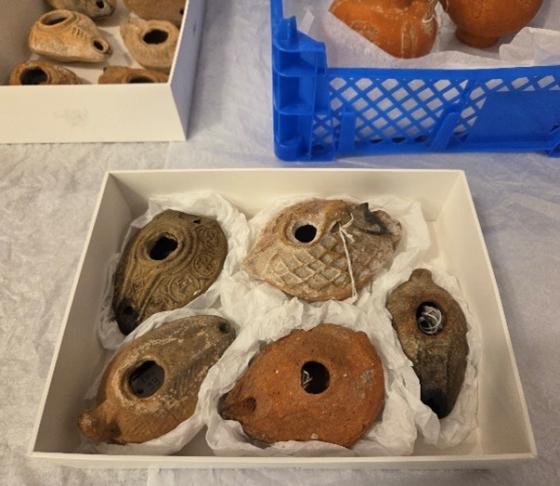
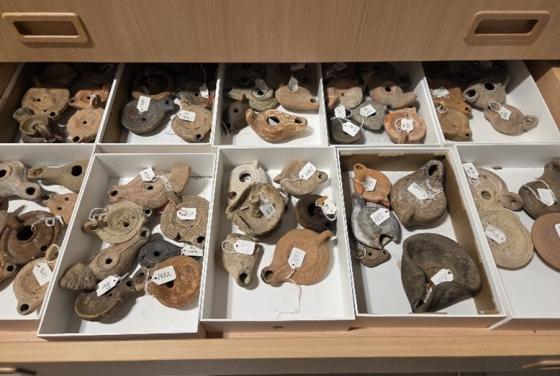
In the meantime, collection care continues behind the scenes: we implement measures for the key areas of conservation: preventive care with Integrated Pest Management and indoor climate monitoring, emergency and disaster preparedness, conservation storage for objects, and a long-term project to create a detailed condition assessment for both collections. Pictured here is a glimpse into the ongoing task of logging the collection of clay lamps in the Archaeological Museum: these objects are examined, their condition documented, and their storage amended by nesting them in acid-free tissue to reduce the risk of mechanical damage. During this process, objects needing urgent remedial care are flagged for priority treatment in the new conservation laboratory.
Dr. Dipika Nadkarni
Conservator
Archaeological Museum | Bible Museum
University of Münster
Germany